
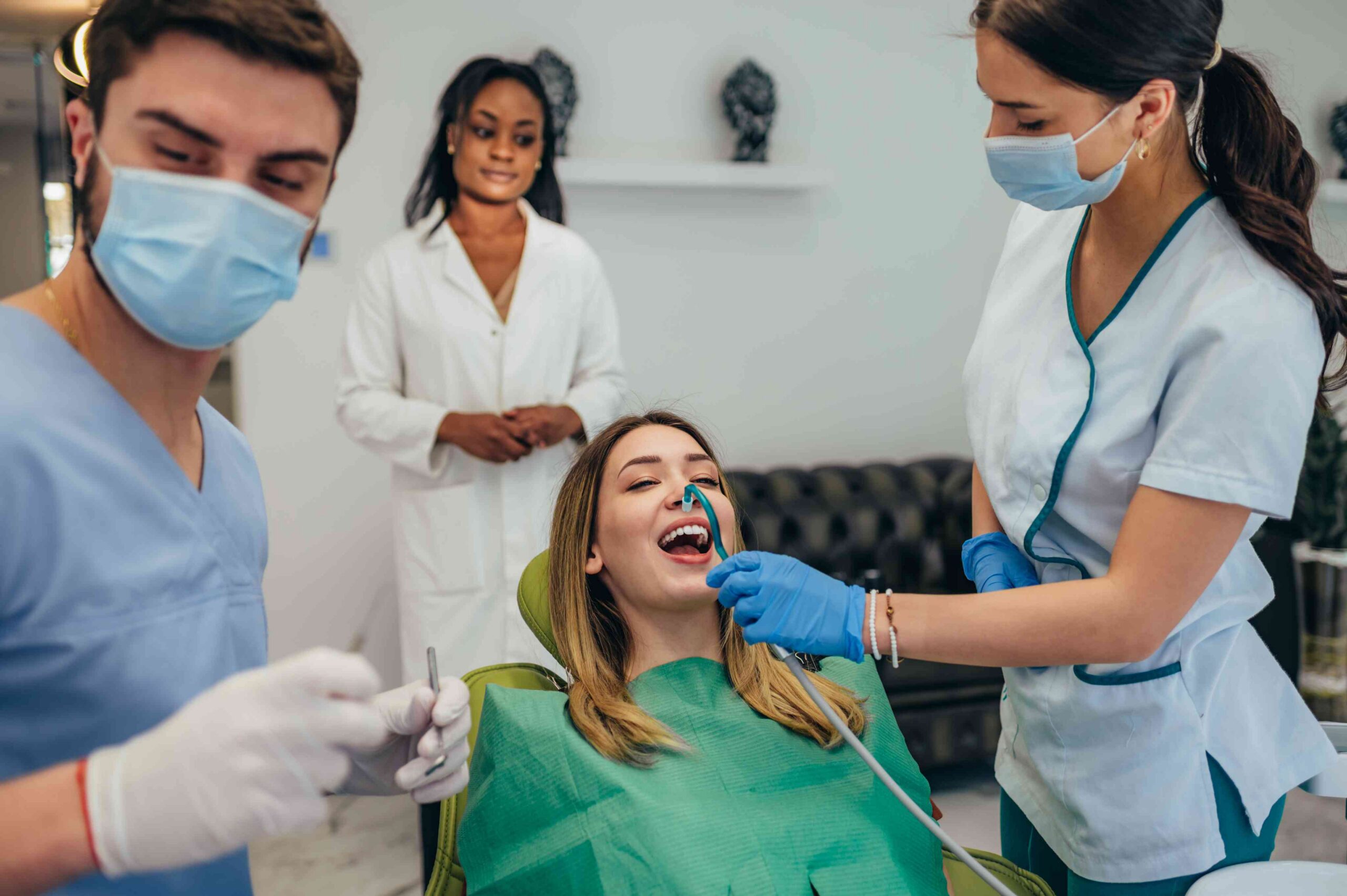
Tooth colour can change because of foods, drinks, tobacco, ageing, medications, and other factors, but not every type of discoloration responds in the same way. For patients considering teeth whitening, a dental evaluation can help determine whether staining is likely to respond to whitening and whether existing crowns, fillings, or other restorations may affect the final appearance. Professional options can be provided in-office or through dentist-supervised take-home care, depending on individual needs and oral health.
A brighter smile may sound like a simple cosmetic goal, but tooth colour is more complex than choosing a lighter shade. Coffee, tea, tobacco, ageing, certain medications, and everyday wear can influence how teeth look over time. Existing dental restorations can add another consideration because they do not necessarily respond to whitening materials the way natural enamel does.
At Livonia Family Smiles, patients interested in teeth whitening can first have their teeth and gums evaluated so the reason for discoloration and the condition of existing dental work can be considered. The practice offers both in-office and take-home whitening options in Livonia.
Why Teeth Change Colour Over Time
Natural teeth do not stay exactly the same shade throughout life. Dark-colored drinks, certain foods, tobacco, ageing, some medications, and normal enamel changes can all influence tooth appearance. Some stains sit closer to the surface, while other discoloration develops within the tooth structure.
This distinction matters because teeth whitening does not affect every type of discoloration equally. Surface and common lifestyle-related stains may respond differently from colour changes that originate deeper within a tooth. A dentist can examine the pattern of staining and discuss whether whitening is likely to produce a noticeable change.
Why an Evaluation Comes Before Whitening
Cosmetic treatment should begin with a healthy foundation. Cavities, gum inflammation, exposed roots, cracked teeth, or significant sensitivity may need attention before whitening is recommended.
Professional teeth whitening is most useful when the dentist understands what is causing discoloration and whether the teeth and gums are healthy enough for treatment. The clinic’s whitening guidance specifically notes that professional assessment can help determine whether whitening is appropriate for an individual smile. The evaluation is also a good time to discuss previous dental work. Crowns, fillings, bonding, veneers, and bridges may remain in their existing colour even if surrounding natural teeth become lighter.
What Professional Whitening Is Designed to Do
Tooth whitening uses whitening agents to reduce the appearance of certain stains and lighten natural tooth structure. Professional care differs from unsupervised use because the treatment is selected after an oral health assessment and used according to a planned protocol.
Livonia Family Smiles states that it provides both in-office and dentist-approved take-home whitening approaches. An in-office option may appeal to someone who prefers treatment completed in a dental setting. A take-home option may better suit a patient who prefers to whiten gradually according to the instructions provided. Neither choice is automatically better for everyone. Oral sensitivity, starting shade, existing restorations, staining patterns, and personal preference can all influence which approach may be considered.
What Whitening Cannot Change
A common source of confusion is assuming that every white material in the mouth will lighten together. Whitening products work on natural tooth structure, but crowns, veneers, fillings, bonding, and bridges generally do not change shade with bleaching treatment.
This is one reason Cosmetic teeth whitening should be planned with the entire visible smile in mind. If a front crown already matches darker natural teeth, whitening the surrounding teeth may make the crown appear different afterward. The same limitation applies to some deeper forms of discoloration. The clinic notes that certain stains are harder to correct because their cause lies within the tooth structure.
Sensitivity and Gum Comfort During Whitening
Temporary sensitivity can occur after whitening. The clinic notes that some patients may notice sensitivity in the days immediately following professional treatment.
Patients with sensitive teeth should mention this during the consultation. The dental team may discuss whether adjustments to the whitening approach are appropriate based on oral health and the patient’s history. Gum protection also matters. Whitening products should be used as directed rather than applied more often or in larger amounts to speed up the result.
A Collaborative Approach to Personalized Smile Enhancement
Cosmetic care involves much more than picking a lighter shade. At our practice, Dr. Karl Winter evaluates how shade updates align with existing crowns, implants, or complex restorations.
Alongside him, our skilled team blends advanced general, aesthetic, and endodontic care to evaluate discoloration on previously treated teeth while addressing overall oral health, alignment, and full-mouth aesthetics. Together, these distinct clinical perspectives ensure your teeth whitening is safely integrated into a balanced, long-term smile plan.
Everyday Benefits Patients May Notice
The main purpose of Professional teeth whitening is cosmetic. For suitable patients, it may reduce the appearance of stains on natural teeth and create a brighter-looking shade.
Practical benefits may include:
- Reducing visible staining from certain foods and beverages
- Refreshing the appearance of natural teeth
- Providing a professionally guided whitening approach
- Allowing existing restorations to be considered before treatment
- Giving patients instructions for maintaining the result
- Helping patients understand whether another cosmetic option may be more suitable
The result varies from person to person because starting shade, stain type, habits, enamel characteristics, and dental restorations differ.
What to Expect Before, During, and After Treatment
Before treatment, the dentist may examine the teeth and gums, review sensitivity, and identify visible restorations. The patient can also explain which areas of discoloration bother them most.
During Tooth whitening, the exact process depends on whether an in-office or take-home method is selected. Patients should follow the application and wear instructions provided rather than changing the amount or frequency on their own. After whitening, some temporary sensitivity may occur. The clinic advises that teeth can also be more prone to staining shortly after treatment and recommends avoiding stain-causing foods, drinks, and tobacco during that period.
Keeping a Brighter Shade for Longer
Whitening results are not permanent. Diet, oral hygiene, tobacco exposure, and normal ageing can gradually influence tooth colour again. A second Cosmetic teeth whitening treatment may sometimes be considered later, but timing should be based on dental guidance rather than frequent unsupervised use.
Brushing twice daily, cleaning between the teeth, and attending professional cleanings can also help control plaque and external staining. For patients who regularly drink coffee or tea, practical habits such as rinsing with water afterward may help reduce how long pigments remain on tooth surfaces.
Local Patient Review
“I wanted my teeth to look brighter but was concerned about an older restoration near the front. Having the difference between whitening natural teeth and existing dental work explained made the decision much easier.”
A Thoughtful Way to Brighten Your Smile
Whitening works best when patients understand the reason for discoloration, the limits of treatment, and how existing dental work may affect the result. A brighter shade can be a reasonable cosmetic goal, but the plan should still begin with healthy teeth and gums.
For patients in Livonia, Redford, and Westland who want to explore their options, discussing shade concerns with Livonia Family Smiles can help clarify whether professional whitening or another approach is more suitable. The goal is to choose care that fits the condition of the teeth, existing restorations, sensitivity, and the appearance the patient hopes to achieve.
Frequently Asked Questions
Who may be a good candidate for whitening?
Adults with healthy teeth and gums and common surface or lifestyle-related staining may be candidates. A dentist should evaluate the mouth first because stain type, sensitivity, and restorations can affect the recommendation.
Will whitening change the colour of crowns or fillings?
No. Crowns, veneers, fillings, bonding, and similar restorations generally do not respond like natural enamel. Their existing shade should be considered before treatment.
Can whitening cause sensitivity?
Some patients may experience temporary sensitivity during or after treatment. People who already have sensitive teeth should discuss this before whitening so the dentist can consider an appropriate approach.
How long can whitening results last?
There is no single timeline for every patient. Diet, tobacco use, oral hygiene, starting shade, and exposure to staining foods or drinks can influence how quickly colour changes again.
Is professional whitening different from store-bought products?
Professional care begins with a dental evaluation and uses a treatment approach selected for the patient. Store-bought products are used without the same individualized assessment of gums, sensitivity, restorations, and stain type.
Can I whiten if I have dental restorations?
Possibly, but restorations will not lighten in the same way natural teeth do. A dentist can help predict whether colour differences may become more noticeable afterward.
Can patients from Redford or Westland receive whitening in Livonia?
Patients from nearby communities can seek cosmetic dental evaluation in Livonia if the location and available services fit their needs. The dentist can then determine whether whitening is appropriate.
Should a dark tooth always be whitened?
No. A single dark tooth may have several possible causes, including trauma or internal changes. It should be evaluated so the cause is understood before cosmetic treatment is chosen.